Vulcan rocket failure destroys 40 Amazon Leo internet satellites in first ULA loss
A United Launch Alliance Vulcan rocket suffered an anomaly about 10 minutes after liftoff from Florida on Sunday, dooming 40 Amazon Leo satellites.
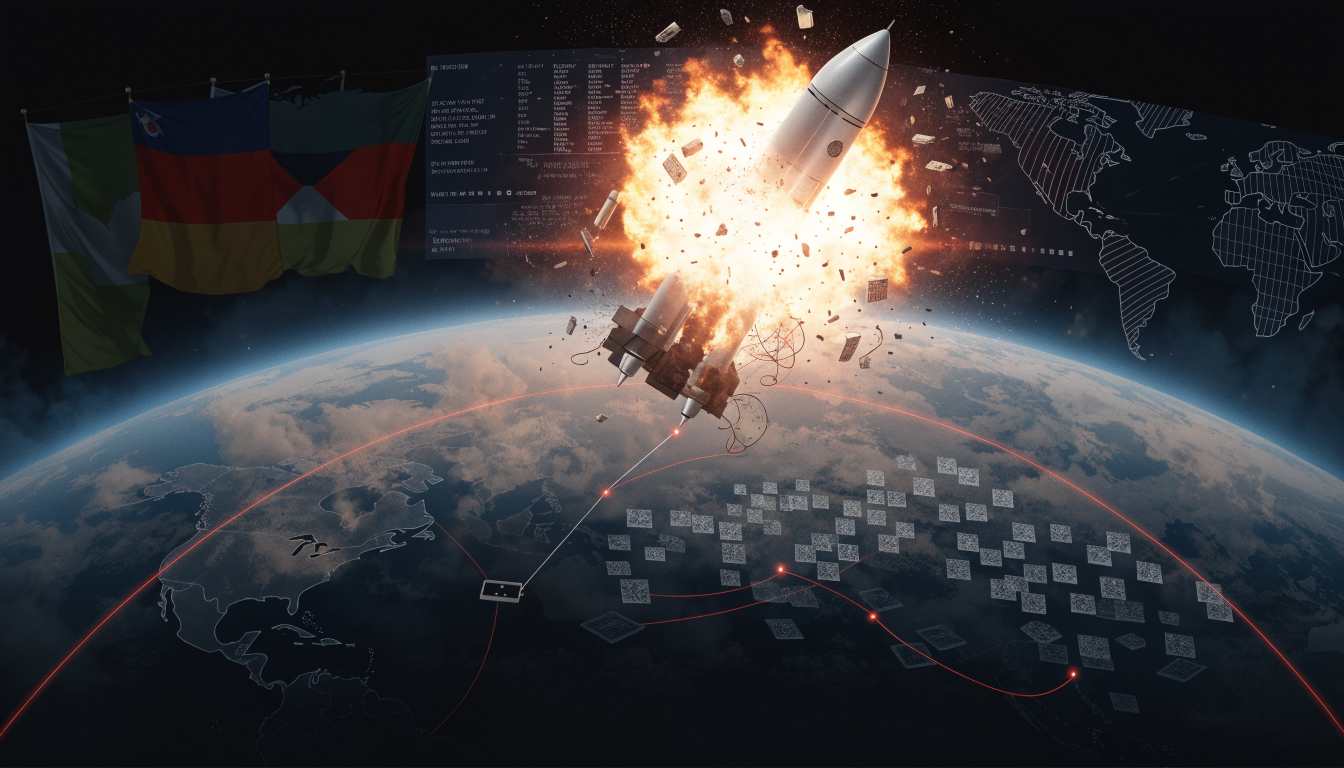
A Vulcan rocket owned by United Launch Alliance failed shortly after liftoff from Florida on Sunday, destroying its payload of 40 satellites for Amazon's Leo internet network in the company's first outright mission failure.
The rocket failed roughly 10 minutes after launch and the cause was not immediately clear, according to a Reuters report. ULA, the joint venture of Boeing and Lockheed Martin, said the vehicle launched from Space Launch Complex 41 at Cape Canaveral Space Force Station and did not deliver its payload to orbit.
"Based on data received by our Launch Director, we confirm that the Vulcan vehicle launched from Space Launch Complex 41 suffered an anomaly 10 minutes into the flight and failed to deliver the Amazon mission to orbit," ULA said in a statement issued about 50 minutes after liftoff.
"Every flight generates data, and every flight teaches us something," the company added. "Since the anomaly just occurred, we don't have any specific data yet to understand what occurred today." ULA said it would work with its customer "to find the cause, determine the appropriate corrective action and return to flight as quickly as possible."
A setback for a new flagship
It was the first outright failure of a ULA rocket since the company was formed in 2006, and only the fifth flight of the Vulcan, which replaces ULA's Atlas 5 fleet. The launch was Vulcan's first in nine months, after ULA and booster supplier Northrop Grumman worked to resolve nozzle problems on strap-on solid-fuel boosters that marred two earlier flights.
The six solid boosters appeared to work normally on Sunday, falling away after boosting the rocket out of the lower atmosphere. The two methane-burning BE-4 first-stage engines, supplied by Blue Origin, appeared to fire longer than ULA's pre-launch timeline called for. After stage separation, something went wrong during the planned 12-minute, 15-second burn of the hydrogen-fueled Centaur upper stage. ULA did not immediately provide further detail.
The grounding threatens a launch cadence ULA hoped to establish for Amazon's constellation, designed to compete with SpaceX's Starlink. Sunday's flight was the first of 38 Vulcan missions Amazon has purchased; ULA has already flown eight Leo flights on Atlas 5. Amazon has also booked 24 launches on Blue Origin's New Glenn, 24 on Europe's Ariane 6 and 13 on SpaceX's Falcon 9.
Constellation still short of target
More than 3,300 Leo satellites will be needed to complete the network. Sunday's flight would have pushed the total launched to date to 436.
"There is risk with any launch, and that's especially true for inaugural missions like LV-01," Amazon Leo said in a post on X. "ULA has been a trusted partner for Amazon, and we believe they'll learn from this mission and deliver on their long-term plans for Vulcan."
The failure leaves Amazon waiting on ULA's investigation before it can attempt the mission again.