Voyager 1 to Cross One Light-Day From Earth, a First for Any Spacecraft
NASA's farthest probe will reach the one-light-day mark on Nov. 18, 2026, a distance no other human-made object has traveled.
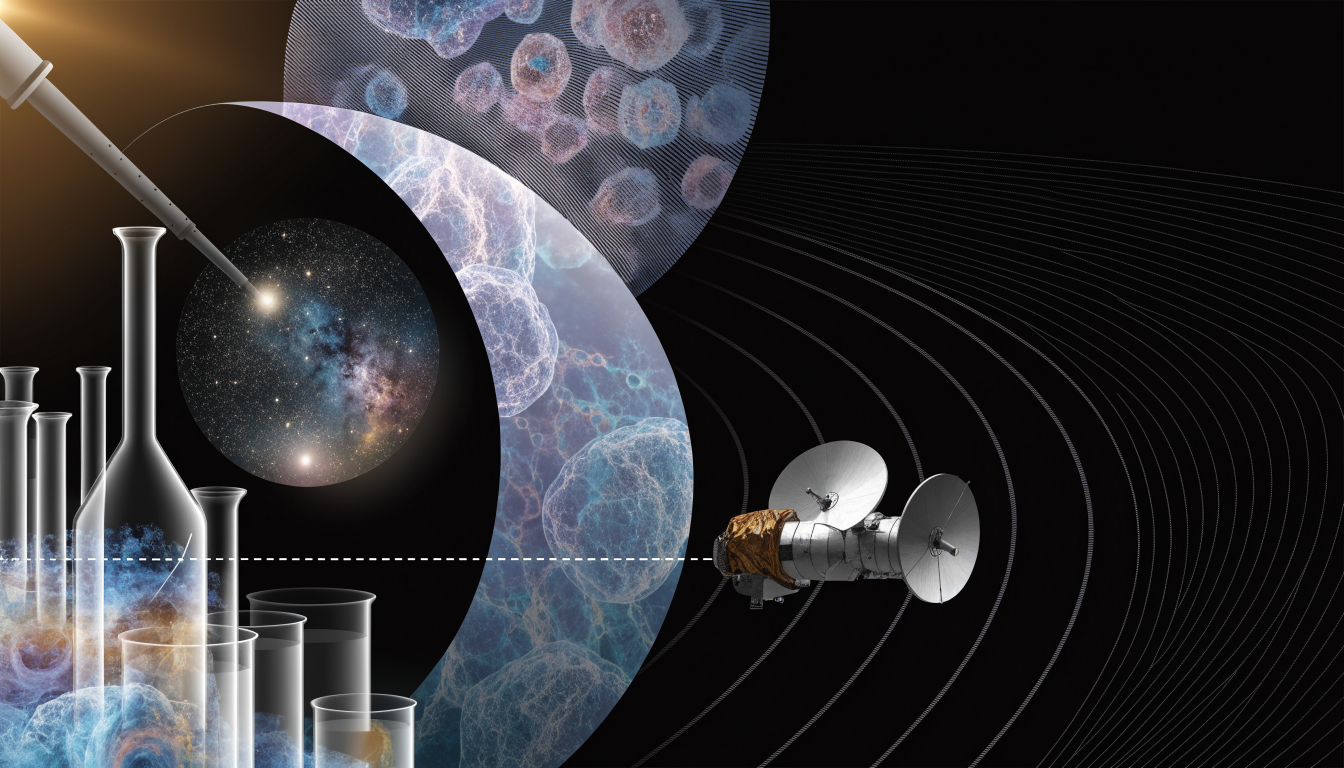
NASA's Voyager 1 spacecraft will reach a distance of one light-day from Earth on Wednesday, Nov. 18, 2026, becoming the first human-made object to travel that far, the agency said.
The milestone will be crossed at 5:16:07 a.m. EST, when the probe sits about 16.1 billion miles (26 billion kilometers) from Earth. A light-day is the distance light travels in 24 hours. Nothing in the universe moves faster than light, which covers roughly 186,000 miles per second.
A 49-year journey
Launched in 1977, Voyager 1 and its twin, Voyager 2, reshaped understanding of the outer solar system before Voyager 1 became the first spacecraft to enter interstellar space in 2012. Voyager 1 is now NASA's longest-running and most distant mission, carrying the Golden Record, a message from humanity.
Distance now defines every exchange with the probe. A command radioed from Earth takes 24 hours to reach the spacecraft, and a reply takes another 24 hours to return — a 48-hour round trip.
"The milestone Voyager 1 is closing in on is about distance, not time," NASA said in an explainer. "And it's very, very far."
Putting the distance in scale
The figure dwarfs familiar cosmic yardsticks. Light crosses the average 238,855 miles (384,400 kilometers) between Earth and the Moon in about 1.3 seconds, and sunlight takes about eight minutes and 20 seconds to reach Earth.
Voyager 2, which took a different path to visit Uranus and Neptune, is on pace to be one light-day from Earth about nine years later, in November 2035.
Public invited to join
NASA has invited the public to mark the event with a symbolic wave of golden light encircling the planet after sunset on Tuesday, Nov. 17, by flashing messages skyward with phones, flashlights and even buildings. The agency is also releasing new visuals explaining the light-day concept.
At its current trajectory, Voyager 1 will keep moving outward, its signals growing ever fainter, as engineers on Earth continue to track the spacecraft nearly five decades after launch.
Sources
- What Is a Light-Day? — NASA Science
- How Far Away Is Voyager 1? One Light-Day, Explained — NASA Scientific Visualization Studio
- NASA's Voyager 1 is about to reach a historic one-light-day milestone — ScienceDaily